


As someone who has been deeply involved in the aluminum foil export industry for over ten years, I am asked daily by overseas clients: “Can your aluminum foil come into direct contact with food safe?” This seemingly simple question reflects consumer concerns and is crucial to our reputation and confidence as exporters. Today, based on my practical experience and industry insights, I will discuss the safety secrets and quality baseline of food safe aluminum foil.
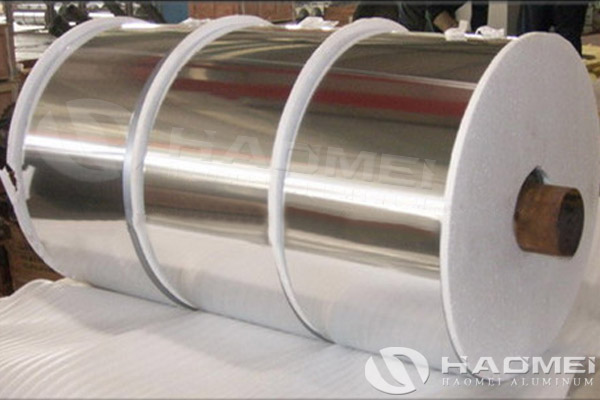
First, let’s clarify the answer: Food safe aluminum foil that meets standards is perfectly safe for direct contact with food. Many clients worry about the health risks of aluminum migration, which stems from a misunderstanding of the difference between food grade and industrial grade aluminum foil. Over the years, I have witnessed numerous overseas buyers choose industrial aluminum foil to save money, only to have their products returned by customs due to excessive heavy metal content—a costly mistake.
Food grade aluminum foil is safe for food contact due to two key factors:
First, the raw materials are pure, processed from high-purity electrolytic aluminum with extremely low impurity content (lead, cadmium, etc.), eliminating contamination at the source.
Second, the production process is compliant, undergoing oxidation and passivation treatment to form a dense protective film on the surface. At room temperature and normal cooking temperatures, aluminum migration is far below national standards and the limits set by the European and American FDA and EU EFSA, even negligible.
Our company’s exported food grade aluminum foil uses high-purity primary aluminum of over 99.7%, undergoing multiple precision rolling and aseptic processing steps. We offer a full range of sizes from 0.008-0.02mm, meeting the needs of overseas customers in various scenarios such as home baking, catering packaging, and food processing. I sent samples to a third-party laboratory in Germany for testing. When tomato sauce wrapped in our aluminum foil was refrigerated for 24 hours, the aluminum migration was only 1/20th of the safety standard, fully complying with local requirements. This is the core reason why our products can maintain a stable supply to the European, American, and Southeast Asian markets.
Let’s discuss the quality requirements for food-grade aluminum foil, which is fundamental to the survival of exporters. Based on practical export experience, I’ve summarized three key bottom lines.
First, raw materials and standards must be compliant. They must meet the standards of the target market, and the packaging must clearly label “for food contact” and the applicable standard.
Second, physical properties must meet standards. Thickness uniformity, tensile strength, and the number of pinholes are all subject to strict requirements. For example, for 0.008-0.012mm thick aluminum foil, there should be no more than 7 pinholes per 16㎡, with a diameter not exceeding 0.2mm; otherwise, leakage and food contamination are likely. I once rejected a batch of goods with excessive pinholes, even if the manufacturer offered a discount, because I didn’t want to risk a small loss for a bigger one—every flaw in an exported product damages the brand.
Third, hygiene and process control are crucial. The production workshop must meet food-grade cleanliness standards, with aseptic operation throughout. Finished products must undergo high-temperature sterilization to prevent oil and dust contamination.
With over a decade of experience in the industry, my biggest reflection is that the core competitiveness of food safe aluminum foil has never been low price, but rather safety and compliance. Today, global requirements for food contact materials are becoming increasingly stringent. As exporters, we must not only uphold quality standards but also proactively educate our customers, providing testing reports and compliance certificates to alleviate their concerns.
Finally, a reminder: while food-grade aluminum foil is safe, prolonged contact with highly acidic or high-salt foods and microwave heating should be avoided. As aluminum foil exporters, our responsibility is to ensure that every roll of exported food safe aluminum foil is safe for overseas customers to use and for consumers to eat with peace of mind. This is not just business, but also our core mission.